Understanding how carbohydrates, proteins, and fats work together in supporting energy and metabolic function.
Carbohydrates, proteins, and fats are the three macronutrients that provide energy and support cellular structure and function. Each plays distinct roles, and their optimal balance varies based on individual factors, activity level, and health status.
Rather than viewing any macronutrient as inherently "bad," modern nutritional science recognizes that all three are essential and contribute to a balanced diet.
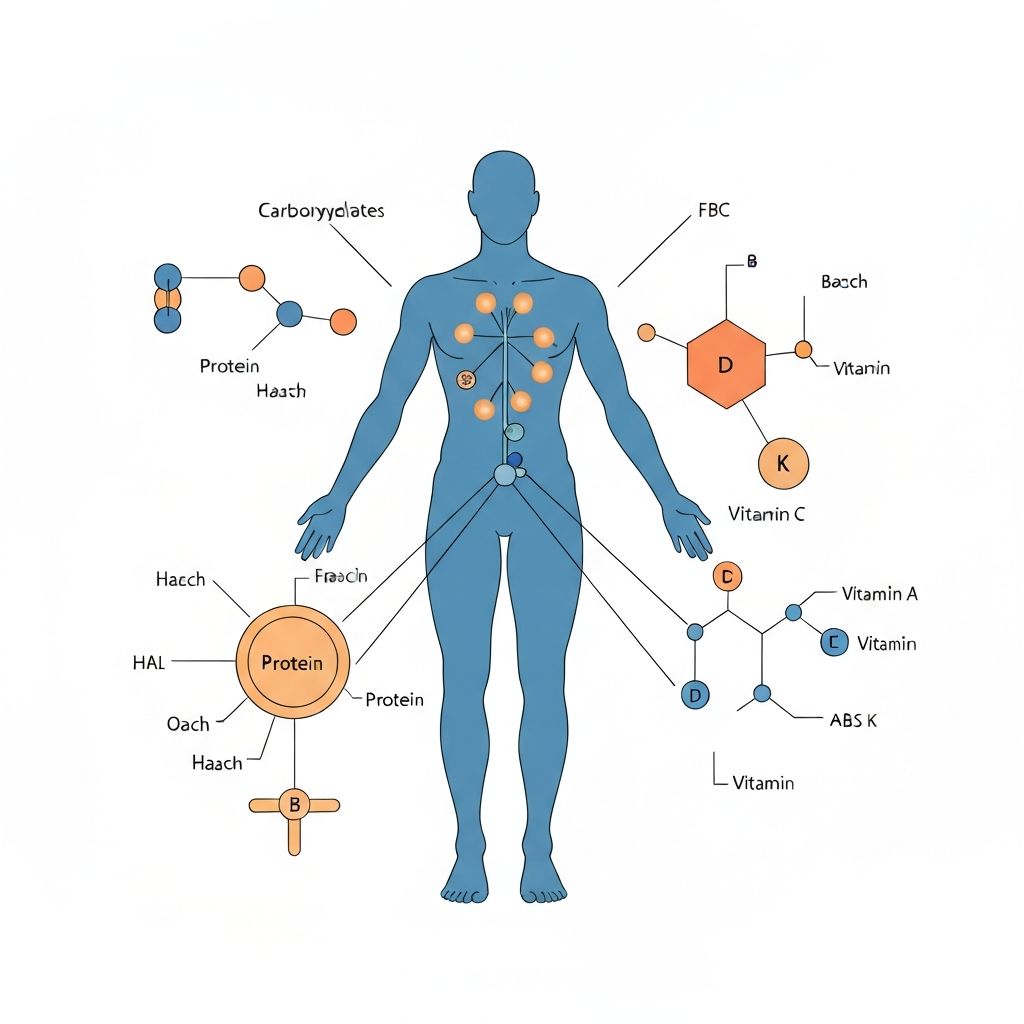
Simple carbohydrates (sugars) provide quick energy but lack micronutrients and fiber. Complex carbohydrates (whole grains, legumes, vegetables) provide sustained energy, fiber, and micronutrients.
Soluble fiber slows digestion and supports cardiovascular health. Insoluble fiber promotes digestive function. Whole foods provide both types naturally.
Carbohydrates are the brain's preferred fuel source and provide quick energy for exercise and daily activities. The body stores excess carbohydrates as glycogen in muscles and liver.
Whole grains, vegetables, fruits, legumes, and dairy provide carbohydrates along with fiber, vitamins, and minerals. Refined carbohydrates lack the micronutrient and fiber benefits of whole foods.
Proteins are broken down into amino acids for absorption. The body synthesizes some amino acids but requires 9 essential amino acids from food. Complete proteins contain all essential amino acids.
Proteins support muscle tissue, create enzymes and hormones, form immune antibodies, and maintain structural integrity throughout the body. During growth and recovery, protein requirements increase.
Protein has a higher thermic effect (calories burned during digestion) than other macronutrients, supporting satiety and metabolic function.
Saturated fats are found primarily in animal products. Unsaturated fats (monounsaturated and polyunsaturated) are found in oils, nuts, seeds, and fish. Trans fats, artificially created, have minimal beneficial role.
Fats are essential for hormone production, cell membrane structure, fat-soluble vitamin absorption (vitamins A, D, E, K), and insulation and organ protection.
Fats provide 9 calories per gram compared to 4 calories per gram for carbohydrates and proteins. Needed in smaller quantities but essential for metabolic and structural functions.
Olive oil, avocados, nuts, seeds, fatty fish, and plant-based oils provide beneficial unsaturated fats. Whole food sources provide additional micronutrients alongside fats.
Macronutrient balance varies by individual. General guidelines suggest 45-65% of calories from carbohydrates, 10-35% from protein, and 20-35% from fats. Actual optimal ratios depend on activity level, metabolism, health status, and personal goals.
This is not a medicinal product. Consult a doctor before use.